

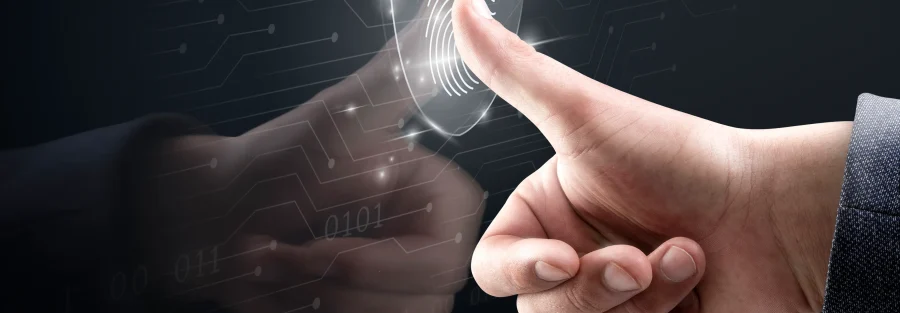
Biometrics Security for Banking and Finance in Abu Dhabi: Protecting Bank Vaults & Data Centers
Reviewed by: Physical Security & Access Control Specialist | Last Updated: September 2026
Biometrics security for banking and finance in Abu Dhabi uses fingerprint, facial, iris, or palm-vein authentication to restrict physical access to high-value areas, including bank vaults, server rooms, and data centers. When integrated with multi-factor authentication, role-based access policies, time-stamped audit trails, and real-time monitoring, biometric access control helps financial institutions reduce unauthorized physical entry, mitigate internal risk, and satisfy regulatory requirement.
Why Abu Dhabi Financial Institutions Need Advanced Physical Access Security
Financial institutions, corporate banking headquarters, investment firms, payment processors, and financial data centers operating across Abu Dhabi face sophisticated physical and digital operational risks. While external cyber threats command significant board attention, physical security vulnerabilities present severe exposure to core operations.
Whether safeguarding physical assets in vaults or protecting core network servers in critical data facilities, legacy access controls-such as proximity cards, PIN pads, and mechanical keys-present systemic security gaps:
- Credential Sharing & Badge Swapping: Physical keycards can be borrowed, misplaced, or passed between employees without verifying identity.
- Lack of Direct Accountability: A badge scan confirms that a specific card was present at a door, not that the authorized cardholder actually swiped it.
- Privilege Drift & Unmonitored Access: Off-hours entry to sensitive server racks or vault compartments often lacks real-time verification and automated oversight.
To protect critical infrastructure across Abu Dhabi’s financial ecosystem, deploying robust biometrics security for banking and finance in Abu Dhabi, UAE replaces assumed identity with verified human characteristics.
What Is Biometric Security for Banking and Finance?
Biometric security links access permissions directly to unique physical or behavioral traits. In financial environments, standard identity verification methods include facial recognition, fingerprint scanning, iris matching, and palm-vein authentication.
Unlike static passwords or plastic badges, biometric characteristics are intrinsically tied to an individual, making unauthorized credential sharing far more difficult. When applied to bank vaults and server infrastructure, biometric access control for banks in Abu Dhabi shifts access security from passive card-reading to active physical identity verification.
Security Feature | Traditional Badges & Keycards | Advanced Biometric Systems |
Authentication Basis | Possession of a physical object | Verified individual physical traits |
Transferability | High (can be lent, stolen, or copied) | Non-transferable identity credentials |
Audit Logs | Tied strictly to badge numbers | Identity-linked access records biometric access control systems in Abu Dhabi |
Anti-Piggybacking | Relies on security personnel | Integrates with smart sensors & turnstiles |
Need to upgrade your physical security infrastructure?
Speak with security specialists to review your access points, biometric options, and system integration needs.
How Biometric Access Control Helps Reduce Insider Risk
Insider risk in banking environments stems from unauthorized physical entry, compromised credentials, or procedural oversights. Deploying biometric authentication systems for banks creates layered physical defense mechanisms across high-risk zones:
1. Dual-Custody Controls for Bank Vaults
In cash vaults and safe deposit environments, dual-custody protocols require two authorized individuals to authenticate their biometrics simultaneously or within a strict time window before vault doors disengage. This ensures no single staff member can gain unmonitored physical access to liquid assets.
2. Server Rack Micro-Segmentation in Financial Data Centers
Securing the external perimeter of a data center is only the first step. Advanced data center biometric security in Abu Dhabi extends control to individual server cabinets. Rack-level biometric locks restrict engineers and third-party contractors strictly to the specific server enclosure specified in their authorized work order.
3. Identity-Linked Audit Trails
Biometric interactions generate detailed, time-stamped access records. By recording exact identities alongside access timestamps, security operations centers can trace physical movement across vault corridors and server aisles during routine audits or incident reviews.
How do biometric systems handle power or network outages?
Enterprise biometric access control systems utilize localized edge controllers with battery backups. Door controllers store encrypted biometric templates locally, ensuring uninterrupted, offline identity verification and access logging during power disruptions.
UAE & CBUAE Regulatory Alignment for Physical Security
Financial institutions in the UAE operate under regulatory oversight established by the Central Bank of the UAE (CBUAE) and national data protection frameworks, including the UAE Personal Data Protection Law (Federal Decree-Law No. 45 of 2021).
Under current CBUAE regulatory standards, including the CBUAE ICT and Cybersecurity Management framework (Article 8)-financial institutions must maintain explicit controls for access-right management, critical information asset protection, physical and environmental security, and identity verification. Deploying physical security for financial institutions in UAE assists compliance teams by delivering:
- Strict Physical Access Governance: Automated enforcement of role-based permissions across critical infrastructure zones.
- Audit-Ready Reporting: Detailed access histories detailing who accessed specific server rows or vault doors, when, and for how long.
- Unified Security Operations: Physical access events integrate directly into enterprise Security Information and Event Management (SIEM) systems for central monitoring.
How to Implement Biometric Security in a Financial Institution
Modernizing banking security solutions in Abu Dhabi requires a structured, multi-phase implementation process to preserve daily operational workflow while maximizing security coverage.
- Conduct an Access & Infrastructure Risk Audit:Identify physical vulnerabilities.
Map all physical entry thresholds, vault perimeters, and data center server rows to identify where legacy keycards or unmonitored physical doors exist.
- Define Multi-Factor Authentication Standards:Select appropriate biometric modal.
Deploy touchless facial recognition or iris scanners at high-throughput main entrances, while adding palm-vein or dual-biometric readers to bank vaults.
- Implement Rack-Level Data Center Security:Protect sensitive hardware.
Equip core server cabinets with biometric smart locks integrated into your centralized access control software.
- Establish Anti-Passback and Dual-Custody Rules:Configure operational governance.
Program system software to require multi-person authorization for sensitive vaults and enforce strict anti-passback controls to eliminate tailgating.
5.Integrate Logs with SIEM and SOC Platforms:Unify physical and cyber security.
Connect physical access event data directly to your central security operation platform for automated real-time alerts on unauthorized attempts.
Planning a physical security upgrade in Abu Dhabi?
Consult with an experienced access control specialist to design, deploy, and maintain compliant systems.
Protecting Biometric Data Privacy in Banking Infrastructure
Biometric data represents highly sensitive personal information. Under the UAE Personal Data Protection Law, managing biometric templates requires strict administrative, technical, and cryptographic safeguards.
To maintain privacy and compliance, modern secure access control for bank vaults and data centers relies on key protection principles:
- Cryptographic Template Storage: Systems do not store raw images of fingerprints, faces, or irises. Physical features are instantly converted into encrypted mathematical templates.
- Template Protection: Biometric systems utilize protected templates with localized encryption and access restrictions, significantly reducing the risk of unauthorized disclosure.
- Decentralized Architecture: Biometric templates reside securely within encrypted edge controllers or smart cards rather than exposed central file systems.
Frequently Asked Questions
What is the primary benefit of biometrics security for banking and finance in Abu Dhabi?
Biometric security replaces transferable badges with verified physical identity, significantly reducing unauthorized access risks, credential sharing, and untracked entries into bank vaults and server rooms.
What types of biometric authentication are used in banks?
Fingerprint, facial recognition, iris matching, and palm-vein authentication are commonly used depending on required security levels, environmental conditions, and integration capabilities.
How much does biometric access control implementation cost in Abu Dhabi?
Implementation costs vary based on total access points, chosen biometric hardware (e.g., touchless facial vs. palm-vein), data center rack counts, software integration scope, and ongoing maintenance requirements.
Can biometric systems integrate with existing security management software?
Yes. Enterprise biometric readers support standard industry protocols (such as OSDP and Wiegand) to integrate with legacy physical access control software, surveillance systems, and SIEM platforms.
How do biometric access systems prevent tailgating?
Biometric systems integrate with physical turnstiles, mantraps (airlock doors), and overhead optical sensors that detect multiple individuals entering on a single biometric scan, triggering immediate security alerts.
Secure Your Financial Infrastructure Today
Modernizing bank vaults, server rooms, and critical data centers with advanced physical access control is essential for managing internal operational risk and fulfilling regulatory obligations. Replacing outdated keycards with identity-verified biometric authentication delivers greater visibility across your most sensitive physical assets.
When upgrading high-security infrastructure, partnering with an established regional provider ensures proper architecture, certified implementation, and local long-term operational support.
Mellon provides specialized physical security, enterprise biometric access control, and managed IT infrastructure solutions tailored for financial institutions, corporate vaults, and critical data facilities across Abu Dhabi and the UAE.